

Introduction — Why base yourself in Toledo’s Old Town
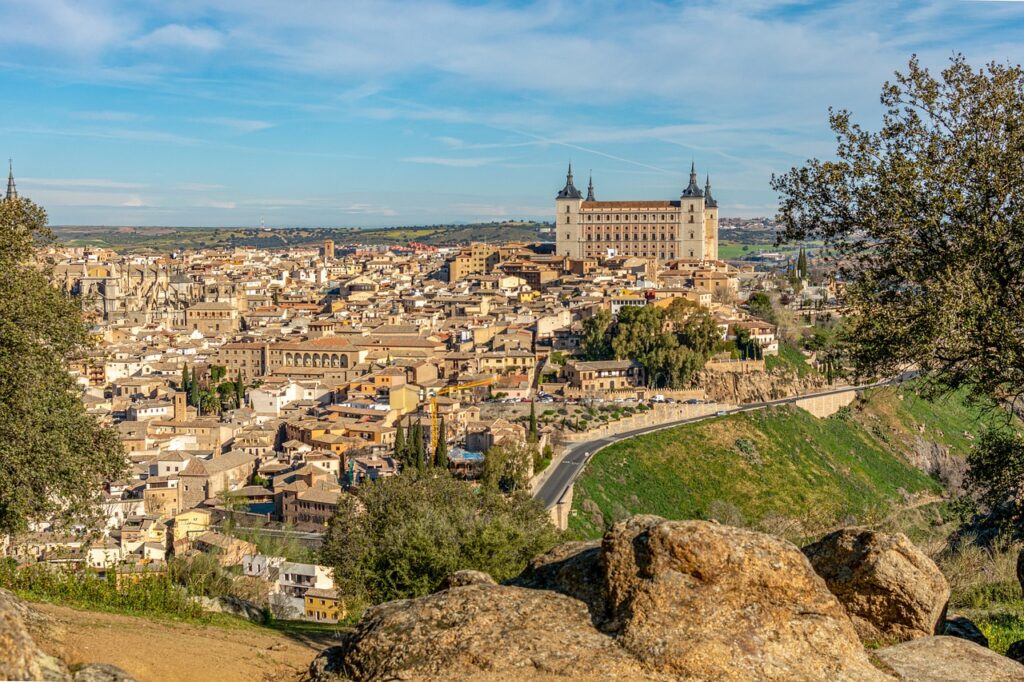
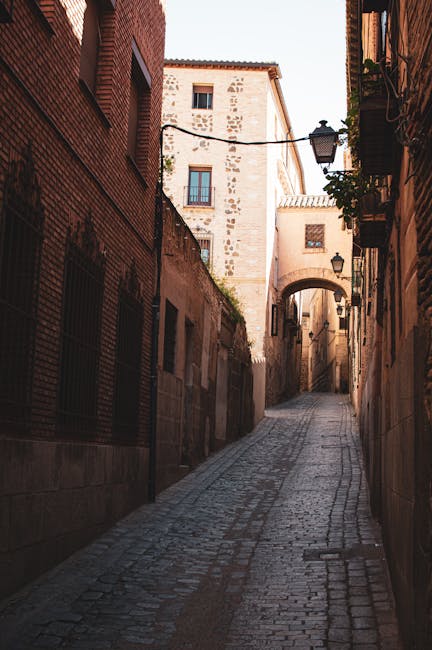
Toledo, the historic capital of Castilla-La Mancha, often feels like an open-air museum. Perched on a hill wrapped by the Tagus River (Río Tajo), its medieval old town — the « Ciudad Imperial » — packs a rare wealth of architecture, religious sites and artisan traditions into a small area. Staying in Toledo’s old town isn’t just about choosing a convenient spot; it’s choosing to immerse yourself in centuries of history where Christians, Jews and Muslims have all left visible, tangible traces. The cobbled alleys, intimate little squares, Gothic churches, historic synagogues and panoramic river views create a unique atmosphere that invites slow exploration and quiet reflection.
Staying in the old town makes it easy to reach the essentials: the Catedral Primada de Toledo (Catedral de Santa María), the Alcázar de Toledo, the Museo del Greco, the Synagogue of Santa María la Blanca and the Monasterio de San Juan de los Reyes are often walkable without relying on transport. Accommodation ranges from boutique hotels housed in old palaces to family-run guesthouses, and the iconic Parador de Toledo sits right by the ramparts, offering spectacular sunrises and sunsets over the valley.
Beyond the monuments, staying in the old town means tasting Toledo’s culinary life: from traditional tapas bars to fine-dining restaurants such as Restaurante Adolfo (Calle de la Trinidad, 19, 45002 Toledo), where a tasting can run roughly €60–€95 per person depending on menu and wine. Local artisans — cutlers and silversmiths — sell one-off pieces nearby: Toledo knives, reproduction swords and jewelry inspired by the city’s three cultures are often only a few steps from your door. Markets, little grocers and antique shops round out the everyday experience.
Finally, the old town is an excellent base for day trips: winery visits, routes to villages in the Campo de Calatrava, or walks along the Tagus. Tourist services are well organised: tourist offices, themed guided tours (Gothic art, El Greco, Jewish toponymy) and multilingual local guides. All of this makes Toledo’s old town a practical and emotional choice for a memorable stay, combining comfort, culture and an intact medieval atmosphere.
History & heritage: a city to read on foot
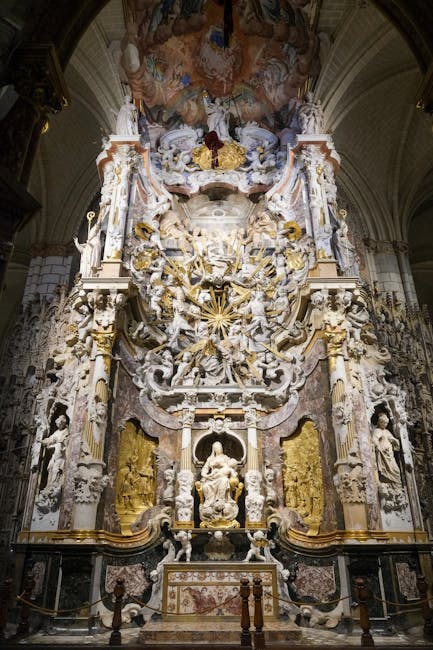
Toledo is a concentrated history lesson. The Ciudad Vieja gathers iconic buildings within a compact area that tell the story of medieval and modern Spain. The Catedral Primada de Toledo (Catedral de Santa María), located at Plaza del Ayuntamiento s/n, 45002 Toledo, is an essential starting point. Built between the 13th and 15th centuries, it blends Gothic elements with Baroque altarpieces. Typical opening hours: October–June 10:00–18:30; July–September 10:00–19:30. General admission: around €12.00 (audio guide and chapel access may vary). An immersive visit reveals the choir stalls, the treasury with the gilded monstrance and outstanding pictorial masterpieces.
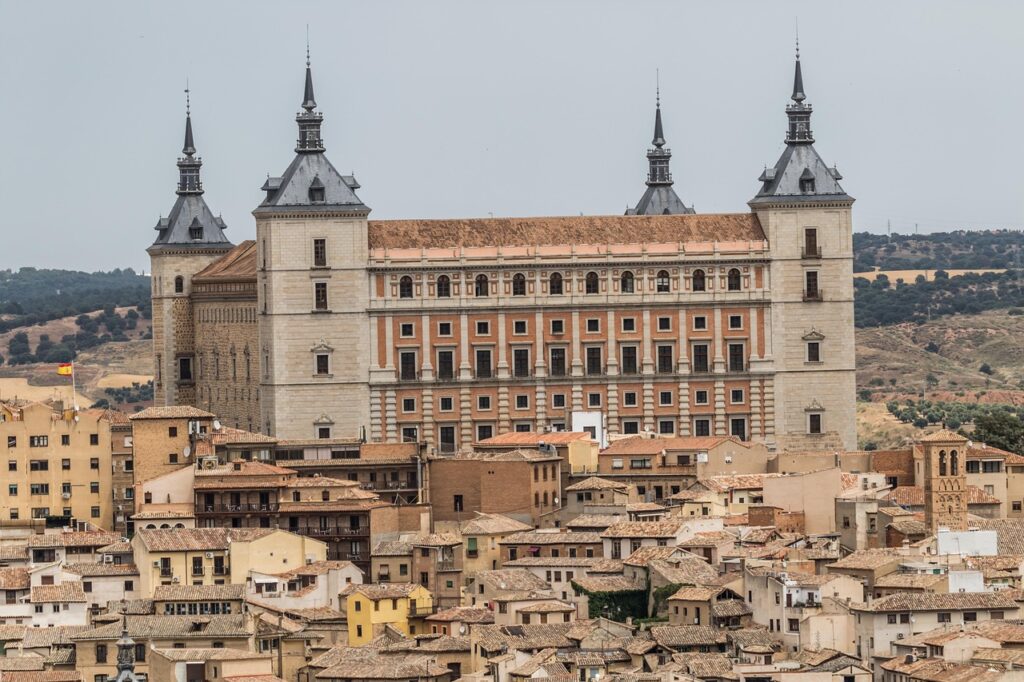
The Alcázar de Toledo, at Plaza de Zocodover s/n, 45001 Toledo, dominates the city and today houses military collections and temporary exhibitions. Typical hours: 10:00–18:00 (seasonal changes); admission roughly €3.00–€5.00. Climbing its towers rewards you with panoramic views over tiled rooftops and the Tagus’ winding course. Nearby, Plaza de Zocodover (Plaza Zocodover, s/n 45001) is the historic central square — a great place to start a stroll or take a coffee break.
Among the religious and cultural treasures, the Museo del Greco (Paseo del Tránsito, 5, 45002 Toledo) showcases El Greco’s work and artistic context; admission about €3.50–€4.50, hours 10:00–18:00 (variable). Iglesia de Santo Tomé (Calle Trinidad, 15, 45002 Toledo) houses El Greco’s famous « The Burial of the Count of Orgaz »; admission roughly €3.50–€5.00, hours 10:00–17:00. The Synagogue of Santa María la Blanca (Calle de los Reyes Católicos, 4, 45003) and the Synagogue del Tránsito (Paseo del Tránsito, s/n, 45002) reflect the medieval Jewish presence; entry about €3.00–€5.00. The Monasterio de San Juan de los Reyes (Calle de los Reyes Católicos, 2, 45003) has an exceptional Gothic cloister; admission around €3.00–€4.50, hours 10:00–18:00.
Practical tips: to avoid queues, book skip-the-line tickets online for the cathedral and Museo del Greco, or reserve a themed guided tour (roughly €10–€25 per person depending on length). Wear comfortable shoes: the old town has steep sections and the cobbles get slippery when wet. Also, aim for early mornings or late afternoons to enjoy warm light and smaller crowds.
Cultural experiences & museums: living art, faith and tradition
Staying in the old town gives you privileged access to museums and cultural events. The Museo del Greco, for example, offers in-depth perspectives on El Greco and his influence on Spanish art — guided tours in French and English are often available by reservation. Temporary exhibitions, lectures and sacred concerts held in churches provide a rich year-round programme.
Religious music and processions (Semana Santa) are highlights in Toledo. Churches such as San Román — now the Museum of Visigothic Art and Councils (Museo de los Concilios y de la Cultura Visigoda, Plaza San Román, 1, 45002) — sometimes host early-music concerts. Tickets vary widely: from about €5.00 for a small recital to €40–€60 for a special concert or combined museum + concert entry.
For a more hands-on discovery, craft workshops are offered in the Jewish Quarter (Barrio Judío): traditional Toledo knife-making, metal engraving and damascening workshops (inlaying gold or silver wires). Workshops generally charge between €10.00 and €45.00 depending on duration and level of involvement. The Synagogue del Tránsito (Paseo del Tránsito, s/n) houses the Museo Sefardí, which traces Sephardic culture, while Santa María la Blanca showcases Mudejar architecture later converted to Christian worship.
Cultural practical tips: buy a « Pulsera turística de Toledo » if available (a combined pass for several museums, typically €12–€20 depending on duration); book popular activities in advance (knife workshops, private guided tours). Take advantage of themed night tours — « Toledo by Night » — which use atmospheric lighting to highlight monuments (prices about €10–€25). Also check with the Tourist Office (Plaza de Zocodover, 45001) for exhibition flyers and student or senior discounts.
Living the old town: where to stay, eat and local tips
Staying in the heart of the old town turns your trip into a full immersion. The Parador de Toledo (Paseo de Recaredo, 4, 45002 Toledo) is an iconic hotel housed in a historic building, with rooms from roughly €120–€220 per night depending on season. It has a panoramic terrace over the Tagus valley — perfect for sunrise breakfast. For budget options, family-run guesthouses and hostales in the Barrio del Alcázar and the Jewish Quarter offer rooms from €50 to €90 per night.
Toledo’s food scene is a major draw: try marzipan (mazapán) pastries at historic sweet shops on Calle de Santo Tomé; sample traditional tapas at Taberna El Botero (address indicative: Calle del Comercio, 23 — confirm locally), where a tapas selection usually costs €10–€18. For a refined meal, Restaurante Adolfo (Calle de la Trinidad, 19, 45002 Toledo) serves creative cuisine rooted in Castilian tradition: à la carte €45–€95; tasting menus €60–€120 depending on wines. Typical restaurant hours: lunch 13:00–16:00, dinner 20:00–23:30 — it’s wise to reserve evenings.
Getting around Toledo’s old town is easy on foot, but mind the terrain: slopes and cobbles call for sturdy shoes. Tourist mini-trains (« tren turístico ») run scenic loops if you prefer minimal walking (fares about €6–€10). Parking is limited inside the Ciudad Vieja; if you drive, book a peripheral car park (Ronda Julio Burell or the lots along Avenida de la Reconquista) and reach the center on foot or by shuttle. For short trips, local taxis and ride-hailing services operate but may be less available late at night.
Local practical tips:
- Best time to visit: spring (April–May) and autumn (September–October) to avoid summer heat and heavy crowds.
- What to wear: bring a lightweight jacket for evenings — the breeze over the Tagus valley can be cool.
- Money: carry small bills for tips and artisan purchases; many small shops accept cards, but not all.
- Safety: the old town is generally safe; stay alert in very touristy spots for your belongings.
- Markets: look for small marzipan shops on Calle Comercio and damascening workshops near the Plaza Mayor.
Scenic walks & day trips from the old town
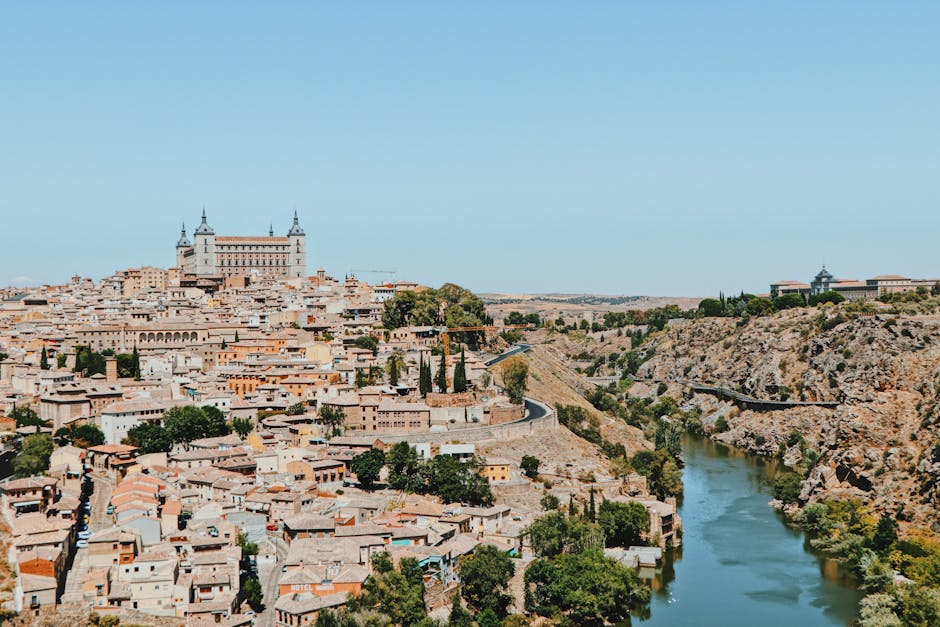
The old town offers spectacular viewpoints and easy trips to round out a cultural stay. The Mirador del Valle (reachable by car or a short hike from Paseo de Miradero) is the most famous viewpoint: the silhouette of Toledo perched on its hill with the meandering river in the foreground — an ideal sunset spot for unforgettable photos. No entrance fee; GPS reference: Mirador del Valle, Toledo. For a walk, Paseo del Mirador and the ramparts along the Río Tajo provide shifting panoramas as the light changes.
The Puente de San Martín (at the western end of the old town, pedestrian access from Calle de Santa María la Blanca) is a medieval bridge over the Tagus with defensive towers; free and open 24/7. Nearby riverside paths offer jogging routes and peaceful picnic spots. The view from the bridge toward the city walls and church spires is a classic photo composition.
For organised outings, plan half-day trips to Consuegra (windmills and castle), or to La Mancha vineyards for local wine tastings (tours + tasting €15–€40 per person). Local guides also offer themed walking tours (2–4 hours, €12–€30): « Medieval Toledo », « The Three Cultures », « In El Greco’s Footsteps ». These routes deepen your understanding of the urban fabric and reveal hidden spots like interior patios and unexpected perspectives.
Suggested itinerary: use a morning to visit the cathedral and the Museo del Greco, an afternoon to wander the Jewish Quarter and see Santa María la Blanca and Santo Tomé, and reserve an evening for dinner in Plaza de Zocodover or on a terrace with a valley view. If you have more time, stop by the Museo de Santa Cruz (Plaza de Zocodover, 3) to complete the historical picture.

Conclusion — Make Toledo’s old town your base for an unforgettable stay
Choosing Toledo’s old town as your base means opting for a full experience: dense, walkable history, top-tier artistic heritage, living culinary and craft traditions, outstanding viewpoints and a steady cultural calendar. Setting up camp in the Ciudad Vieja lets you live the city at different paces — sunrise over the rooftops, museum-filled afternoons, tapas evenings and moonlit strolls beneath stone façades lit for dramatic effect. The key sites — Catedral Primada de Toledo (Plaza del Ayuntamiento s/n, 45002 Toledo), Alcázar de Toledo (Plaza de Zocodover s/n, 45001 Toledo), Museo del Greco (Paseo del Tránsito, 5, 45002 Toledo), Iglesia de Santo Tomé (Calle Trinidad, 15, 45002 Toledo), Synagogue of Santa María la Blanca (Calle de los Reyes Católicos, 4, 45003) — are all within easy reach when you stay in the heart of the old town.
Practically speaking, book popular visits and restaurants like Restaurante Adolfo (Calle de la Trinidad, 19) in advance, check seasonal opening hours (museums and monuments often adjust their schedules), and choose cooler periods to make the most of walks. Comfort and authenticity come together in Toledo: whether you pick a historic hotel like the Parador de Toledo (Paseo de Recaredo, 4) or a small guesthouse on a cobbled street, you’ll take away a sensory experience — kitchen aromas, bell echoes, golden reflections on altarpieces — hard to match elsewhere.
Beyond the monuments, it’s Toledo’s warmth — from artisans, restaurateurs and passionate guides — that makes the difference. Local tips like visiting popular sites during off-peak hours, tasting specialties in family-run shops and catching viewpoints at sunrise or sunset will turn a trip into a lasting memory. For a stay full of history, visual beauty and cultural authenticity, Toledo’s old town is an obvious and deeply rewarding choice.