


Introduction: The Alcázar of Toledo, a Sentinel of Spanish History
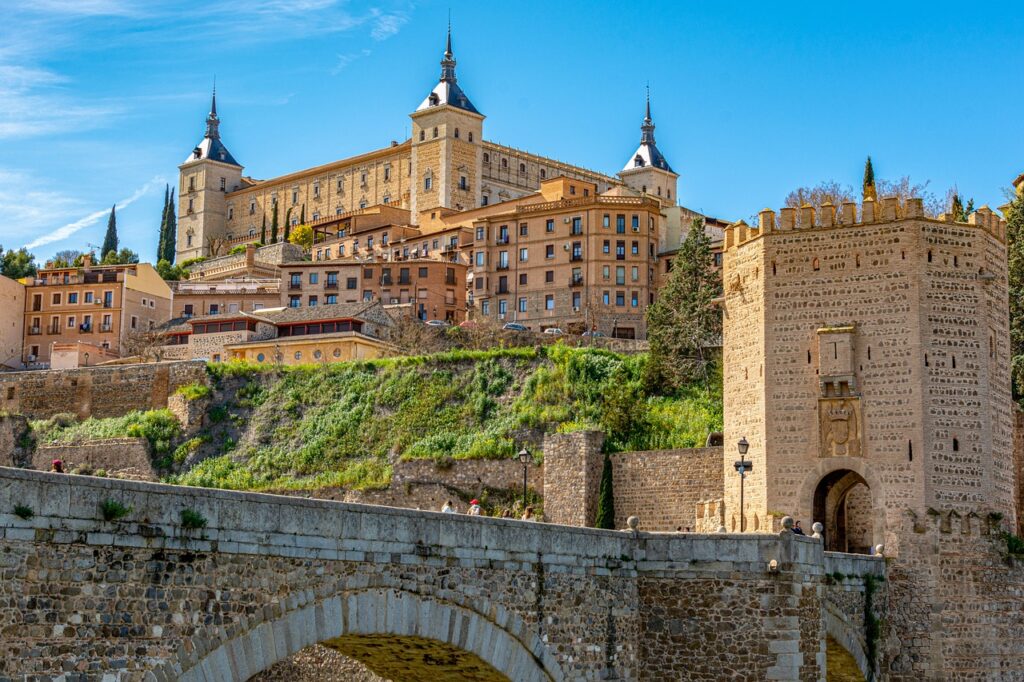
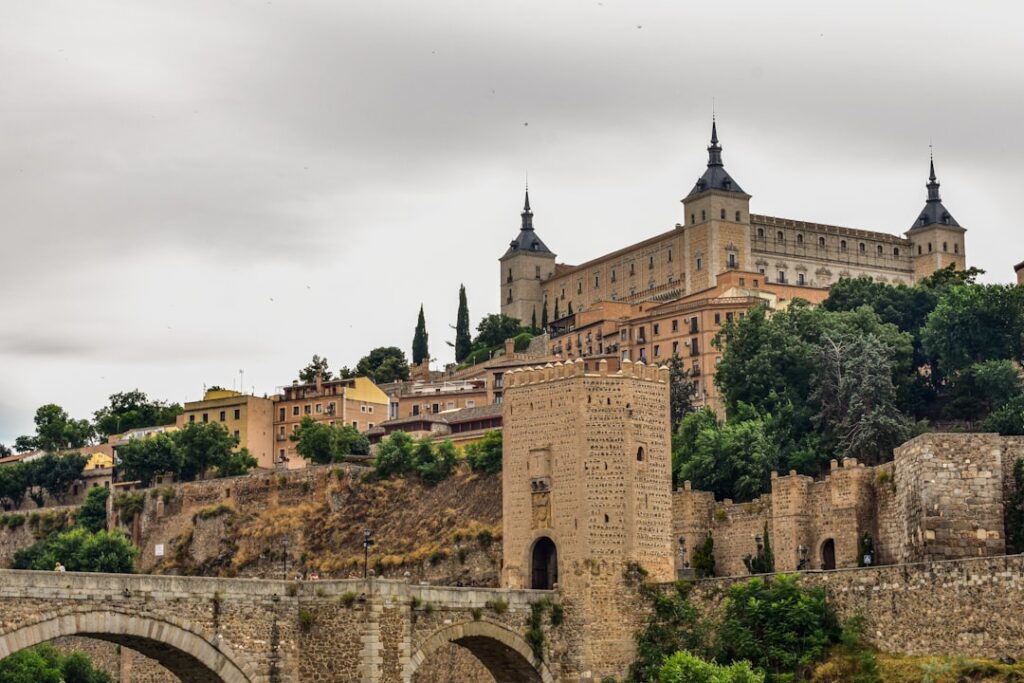
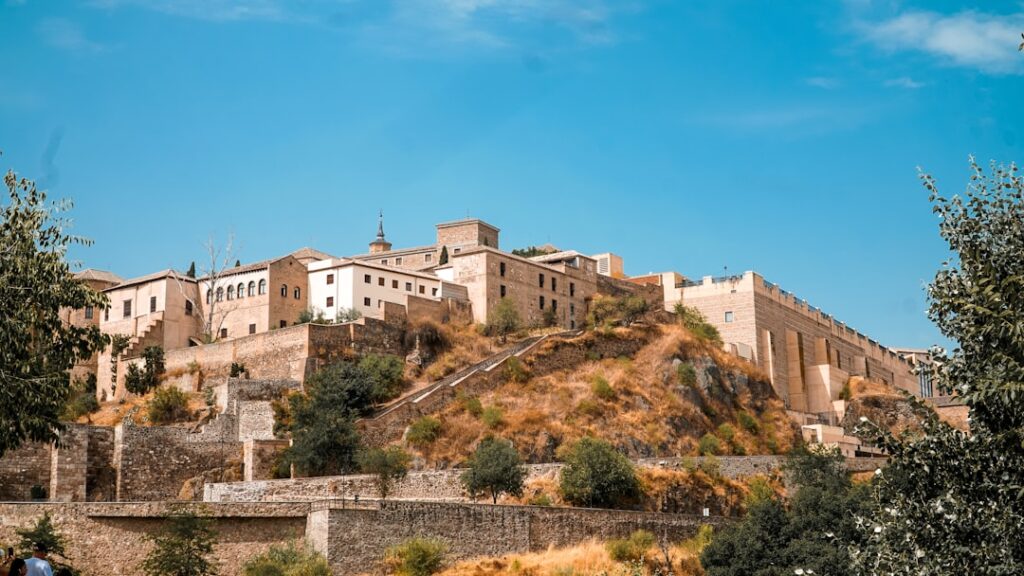
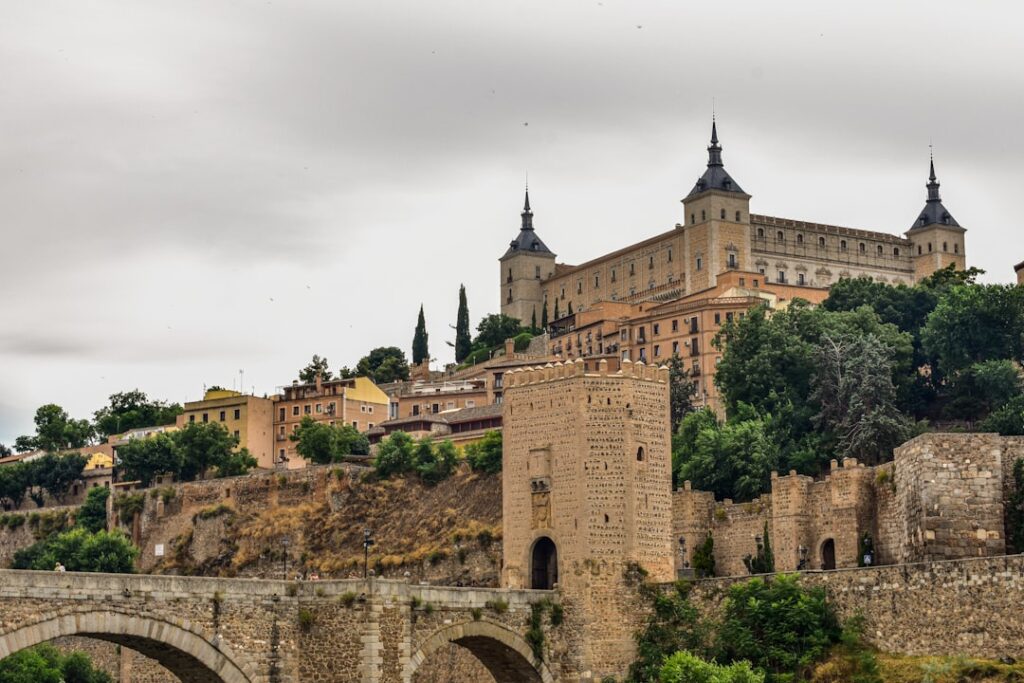
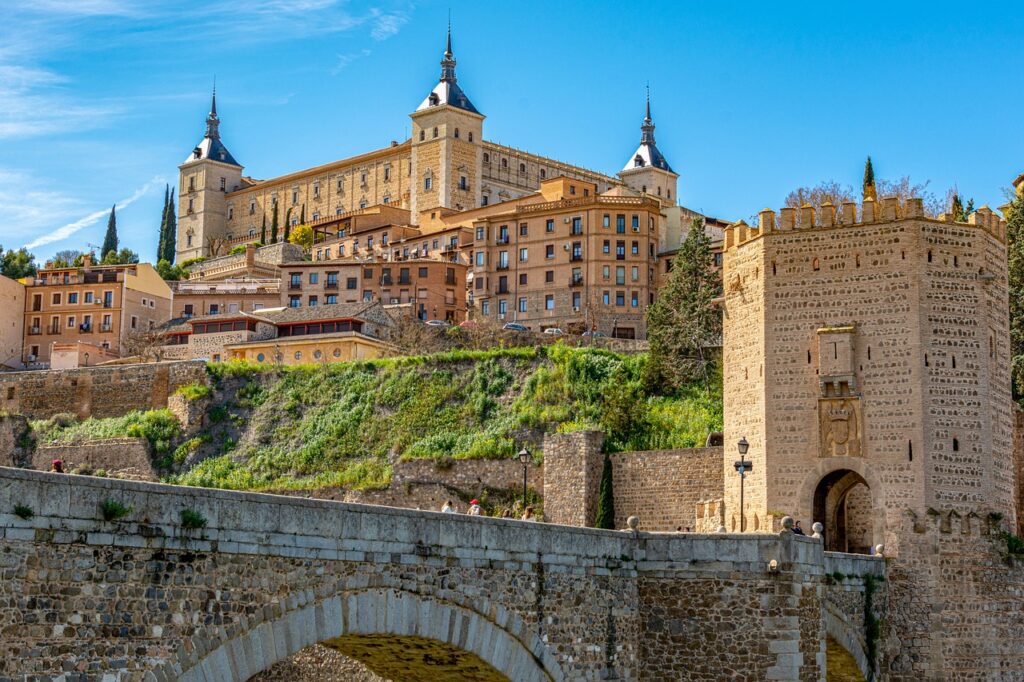
Perched on the highest hill of the old town, the Alcázar of Toledo dominates the skyline as both a visual anchor and a historical landmark of Castilla–La Mancha. This massive, square-built structure with its austere lines has evolved through the centuries, shifting roles and appearances: Roman fortress, medieval royal palace, modern barracks and today a leading museum. Visiting the Alcázar of Toledo means stepping into the architectural layers of Spain — Roman, Visigothic, Muslim and Christian — and into the country’s military and civic memory.
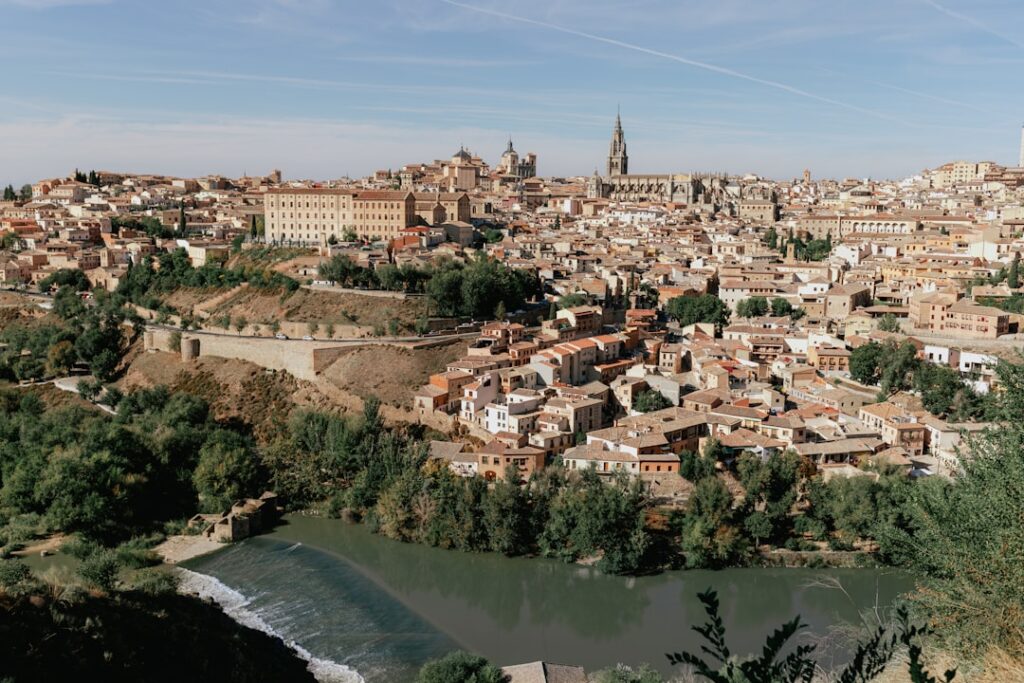
The attraction isn’t limited to an imposing façade; it also offers sweeping views across Toledo’s ochre roofs, the primatial cathedral and the Tagus River, standing watch over the city like a lookout. Its angular silhouette commands the Plaza de Zocodover and the medieval maze of streets, making it a natural starting point for any urban itinerary. Inside, the building has been remodeled multiple times: traces of the Reconquest, Renaissance refurbishments and more recent interventions to turn the site into a museum are all legible to the observant eye.
This guide aims to provide a thorough, practical look at the Alcázar of Toledo: a detailed history, an architectural analysis and notable features, lesser-known anecdotes and essential practical information to plan your visit (exact addresses, opening hours, prices, local tips and suggested routes). Whether you’re a curious traveler, a military history buff or a photographer chasing timeless panoramas, you’ll find concrete tips here to make your experience richer and better organized.
We’ll start by placing the Alcázar in its broader historical context to understand why this building played a central role in the history of Toledo and Spain. Then we’ll unpack its architectural elements — from stone facing to corner towers, restored rooms and the panoramic terrace — describing what you’ll see on site. The anecdotes section gathers stories, local legends and historical incidents (battles, sieges, dramatic restorations), while the practical section gives precise details: exact address, prices in euros, official hours, access tips, how to avoid crowds and how to fit a visit into a typical day in Toledo.
Finally, you’ll get local tips — where to grab the best coffee after the visit, the best vantage points for photos and a few walking routes to extend your exploration into neighboring quarters (the Cathedral of Santa María, the Monastery of San Juan de los Reyes, the Mirador del Valle). This guide aims to be both informative and immediately useful: historical, aesthetic, sensory and practical.
Detailed History: From Roman Fortress to Contemporary Museum
The story of the Alcázar of Toledo is a long succession of states and functions that mirror the major turning points of the Iberian Peninsula. The earliest fortifications on this site date back to Roman times: the strategic position atop the hill allowed control over the Tagus valley and the routes that crossed the region. After the fall of the Roman Empire, the fortress was used by the Visigoths and later by the Muslims during the Islamic period of the peninsula. Over the centuries, the building has been rebuilt and reinterpreted several times.
In the 12th and 13th centuries, following the Christian Reconquest led by Alfonso VI, Toledo became a major political and cultural center. The Alcázar was then integrated into the urban landscape as a palace and, for certain periods, a royal residence. During the Renaissance, under the reigns of Charles V and Philip II, significant works gave it a more monumental aspect; the influence of modern military architecture became visible with modifications aimed at strengthening resistance against advances in artillery.
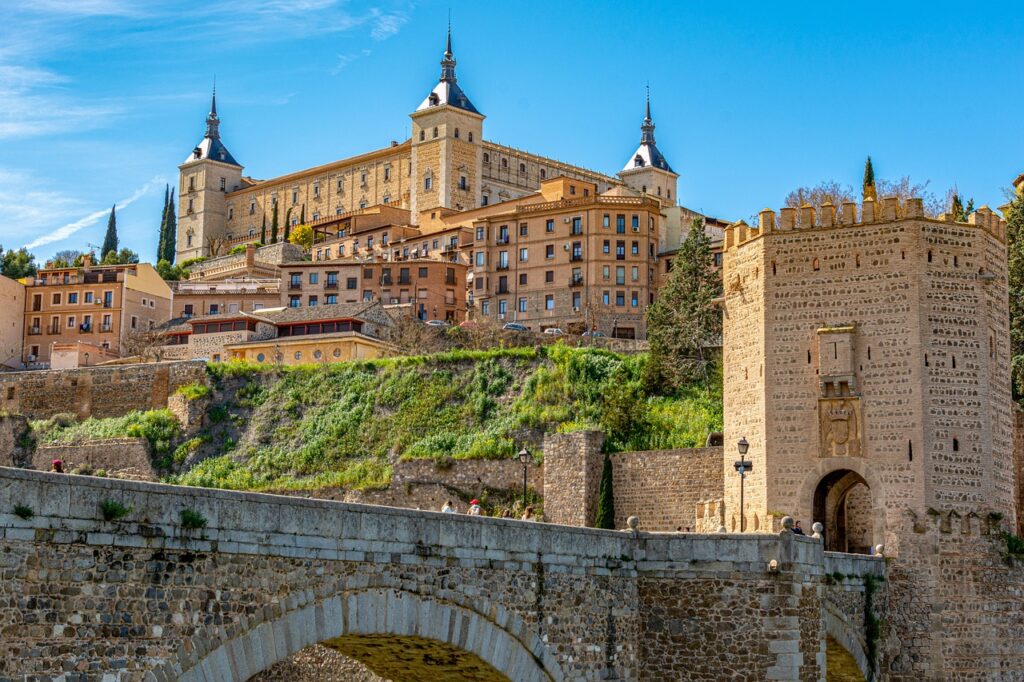
The Alcázar’s military role grew in the modern era: it served as barracks, an arms depot and a military administrative headquarters. The most dramatic event of contemporary times was the Siege of Toledo during the Spanish Civil War (1936–1939). In July 1936, the Nationalist garrison, commanded by Colonel Moscardó, holed up in the Alcázar. The siege lasted about two months and the fortress became a symbol of resistance and propaganda for both sides. The destruction and repairs that followed the war further altered the building’s interior and exterior.
After the war, the Alcázar was restored and repurposed: part of it was dedicated to the Army Museum (Museo del Ejército), which houses collections of weapons, uniforms, banners and historical items related to Spain’s military past. These collections document everything from antiquity to modern conflicts, highlighting not only military aspects but also the connections between armaments, technology and society.
Recent restorations, carried out to bring the building up to contemporary museographic standards, have balanced preservation of historical remains with public access: staged routes, visitor facilities and accessible terraces. Despite these modern interventions, the spirit of the place remains deeply historical: the stones, arrow slits and parapets tell stories of centuries of successive occupations.
Architecture and Major Spaces: Reading the Stones and Volumes
The architecture of the Alcázar of Toledo is a palimpsest of successive interventions. From the outside, the building asserts itself with a square silhouette flanked by massive corner towers. The local stone cladding gives it an ochre-gray tone that blends with the rest of the city. meridian lines, artillery chimneys and rooftop platforms testify to its defensive function adapted to the gunpowder era.
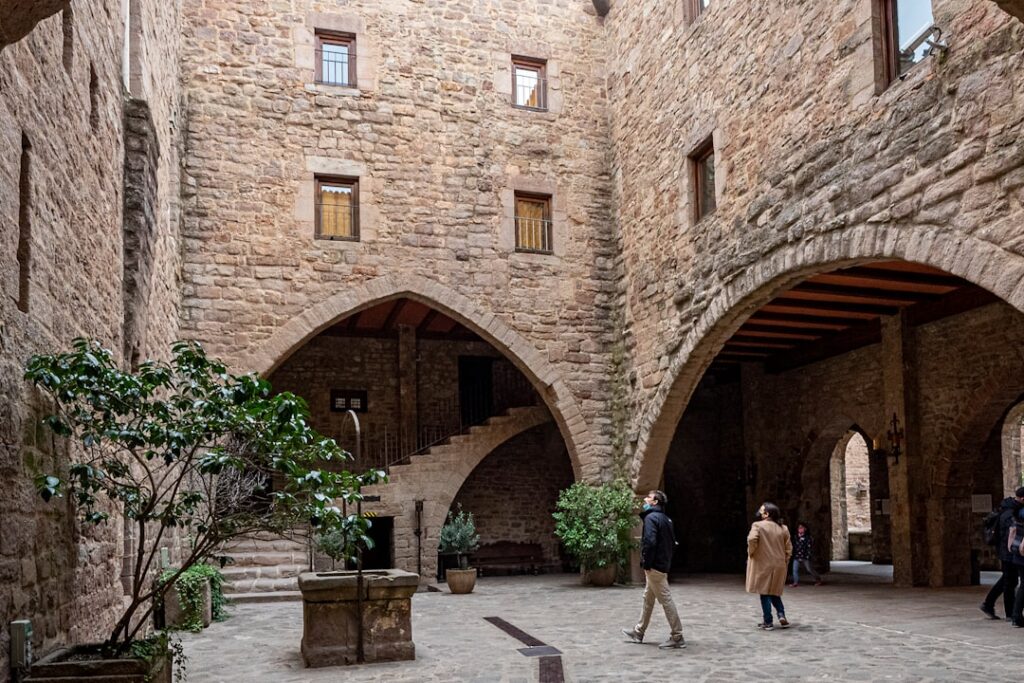
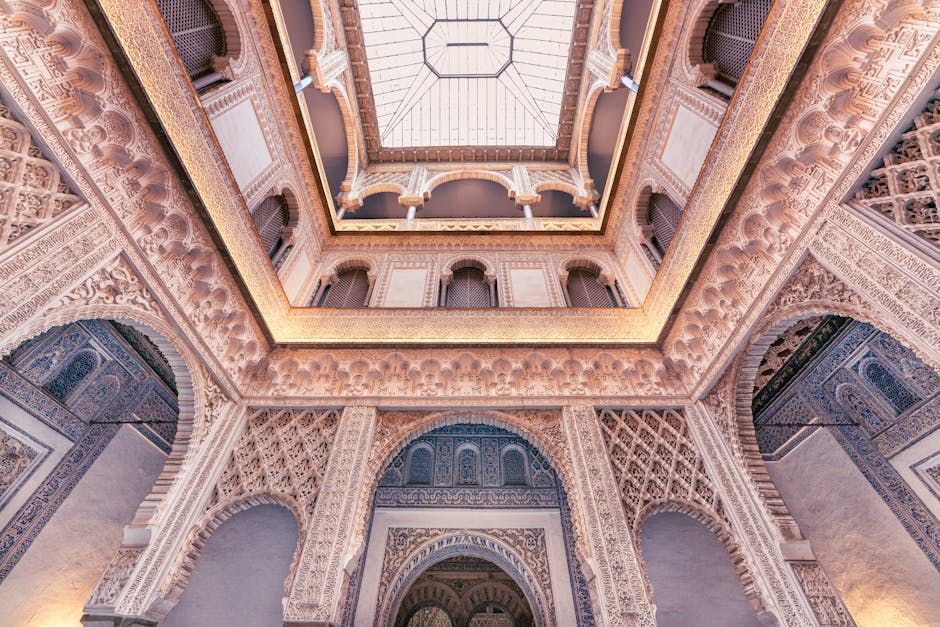
Entering through the main gate on the Plaza de Zocodover side, visitors find a central courtyard — a common typology in Iberian fortress-palaces — which organizes the different functional blocks: exhibition halls, state rooms, military quarters and service areas. Arches, columns and some decorative elements recall the subtle Mudéjar and Renaissance influences that marked modern-era renovations.
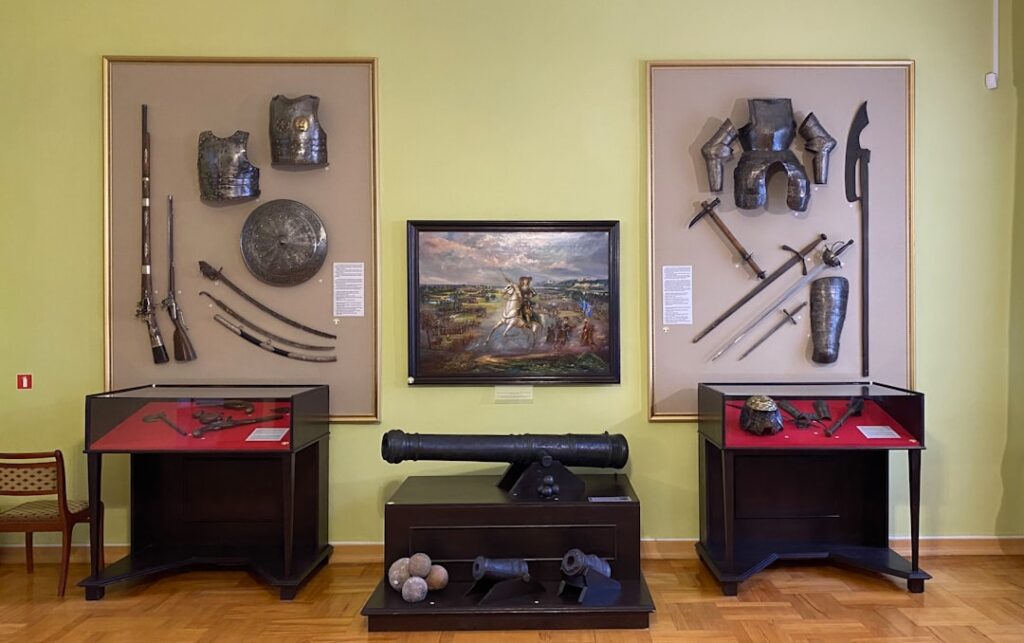
The internal structure reveals rooms of varied volume: large, high‑vaulted reception halls, small barrack chambers and thick corridors. Renovation work has incorporated contemporary museographic paths, but historic elements — massive wooden doors, period ironwork, stone stairways — have been preserved and highlighted. The exhibition rooms of the Museo del Ejército use spatial dramaturgy: suits of armor and cannons are arranged to give visitors a chronological and technical reading.
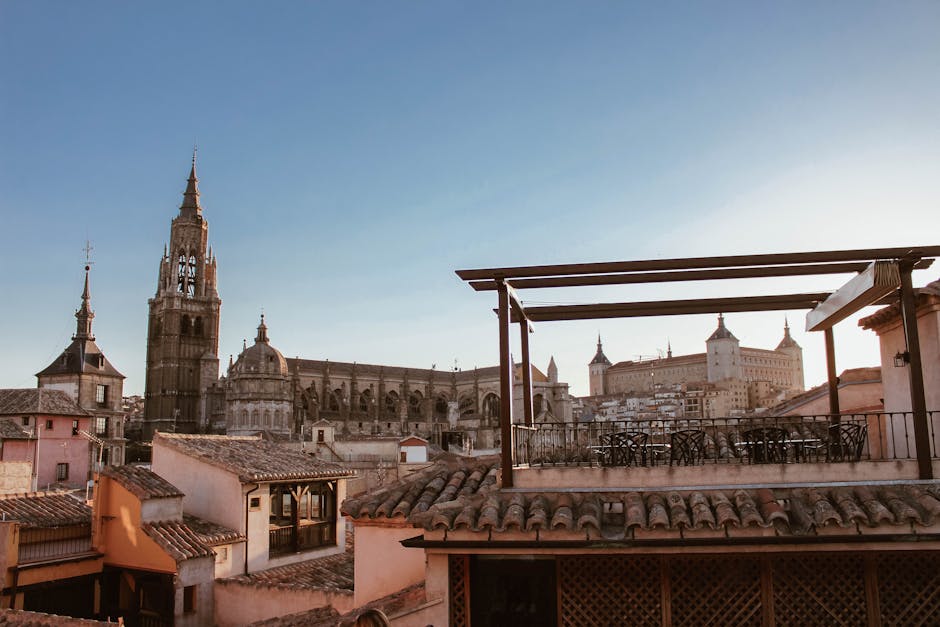
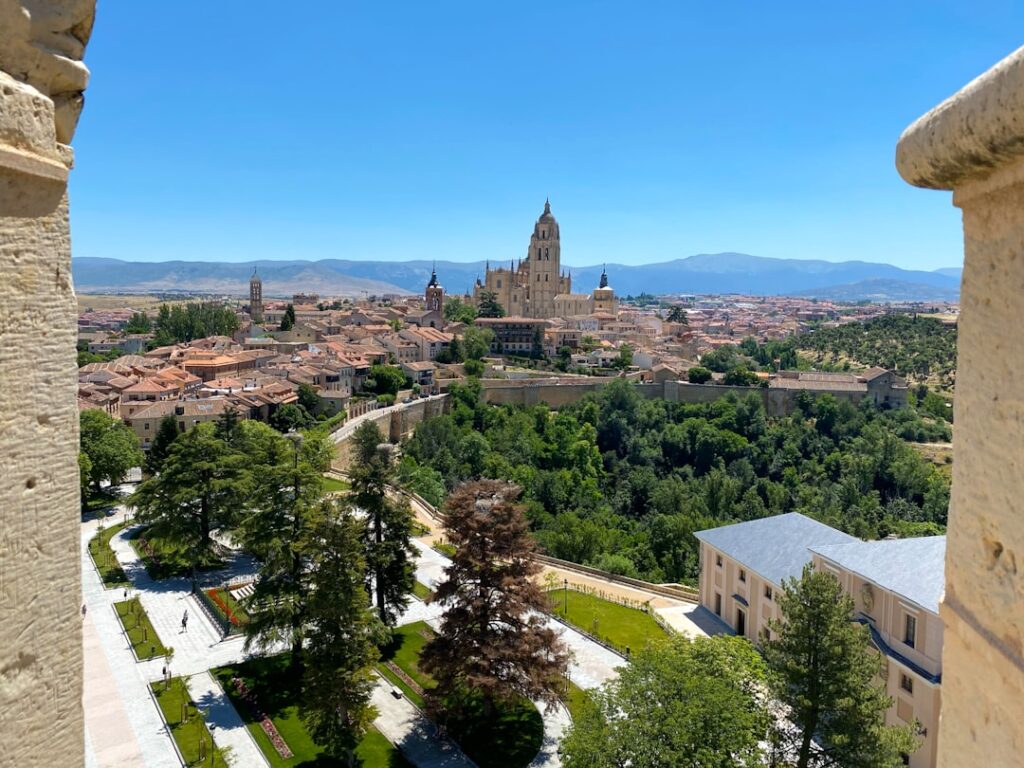
One of the architectural features visitors love most is the upper terrace: open to the city, it offers an exceptional panorama. From this platform you dominate Toledo — the Cathedral of Santa María, the tight cluster of roofs and the Tagus River encircling the old city. The terrace, once a military observation point, is today a prime vantage point for photographers at sunrise and sunset.
- Materials: local stone, solid wood and period ironwork.
- Typology: fortress‑palace — quadrangular plan with corner towers.
- Style: layered styles: Roman/Visigothic foundations, Mudéjar and Renaissance influences, later modern military interventions.
- Highlights: central courtyard, armory rooms, panoramic terrace, historic stairways and doors.
From a museographic point of view, the adaptation prioritized creating a smooth flow between the permanent history displays and temporary exhibitions. Multilingual information panels (Spanish, English, sometimes French) help contextualize the exhibits. Architecture lovers will enjoy spotting traces of different phases: look at the stone joints, the rhythm of openings and the load‑bearing structures that reveal the chronology of interventions.
Collections, Museums and Exhibits: What to See Inside
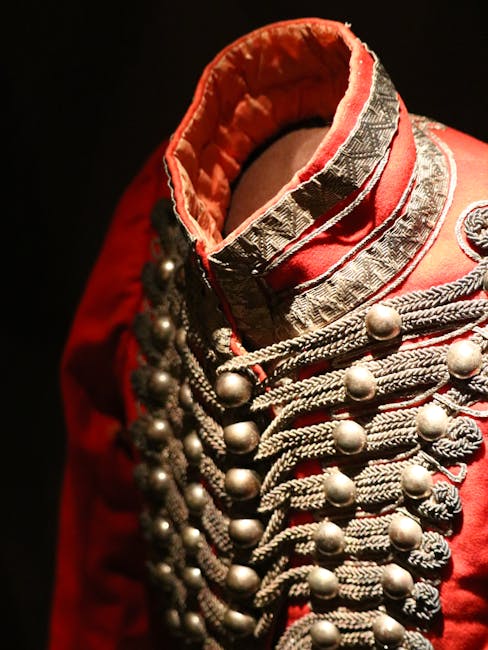
Since its partial conversion into a museum, the Alcázar of Toledo hosts collections focused on military history, parade regalia and symbolism of the Spanish army. The Museo del Ejército presents items ranging from edged weapons and artillery equipment to uniforms, banners, paintings and archival documents. The permanent exhibition frames the technological and tactical evolution of weaponry, but also explores the link between national identity and military memory.
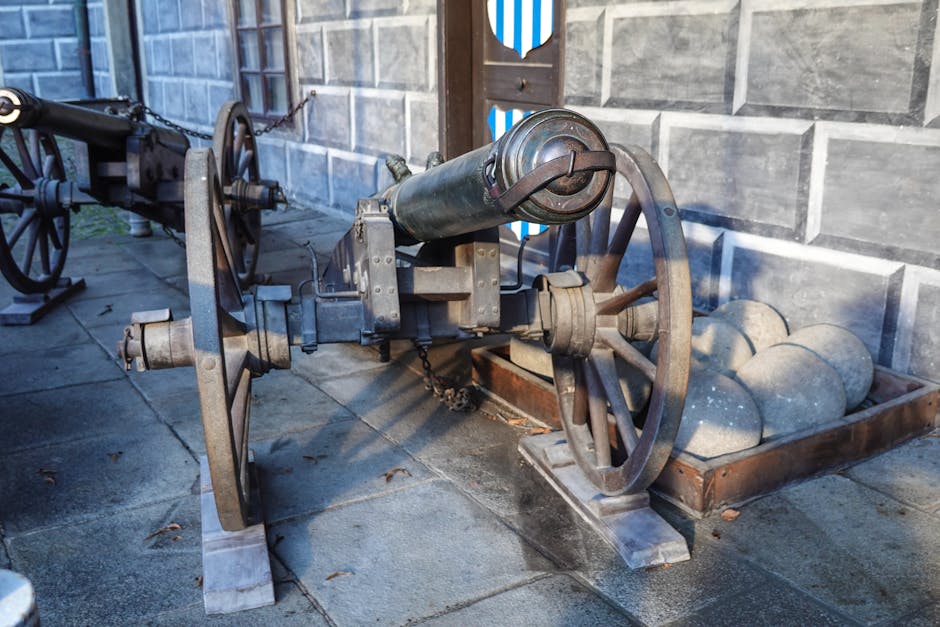
Among the standout pieces you shouldn’t miss are historic cannons, a fine collection of decorated edged weapons, period uniforms and flags that took part in major conflicts. The display cases document not just technical aspects but also personal stories: commanders’ biographies, siege narratives and personal items that humanize the military dimension. Some rooms offer multimedia presentations and tactical models that help explain famous sieges like the one in 1936.
The museum route is often complemented by temporary exhibitions — themed shows on the evolution of uniforms, exhibitions dedicated to a specific battle or era — and by educational spaces designed for families and school groups. Labels in Spanish and English make the visit accessible to international audiences, and audio guides may be available (check on site for languages and fees).
- Permanent collections: weaponry, artillery, uniforms, banners, historical paintings.
- Temporary exhibitions: recurring thematic shows (check the museum calendar).
- Educational resources: workshops for schools, family activities depending on the season.
For visitors, it’s recommended to allow at least 1h30 to 2h to explore the permanent collections, longer if you want to delve into temporary exhibitions or use an audio guide. Some rooms, due to the preciousness of the objects, have controlled flows and may require patience during peak periods.
Practical Information: Address, Hours, Prices and Access
Planning your visit to the Alcázar of Toledo requires knowing concrete details: exact address, opening hours, prices in euros and logistical tips. Here are the essentials, accurate at the time of writing but subject to change: always check official websites or local tourist information before you go.
Exact address:
Alcázar of Toledo (Museo del Ejército)
Plaza de Zocodover, s/n, 45001 Toledo, Spain
Hours (indicative):
– General opening: Tuesday to Sunday, 10:00 – 18:00 (closed Mondays).
– On some weekends, public holidays and during high season, hours may be extended (check seasonal schedules).
– Temporary closures of galleries for renovation or special events: consult the Museo del Ejército’s official site or Toledo’s Tourist Office.
Prices (indicative, in euros):
– Standard ticket: around €6.00.
– Reduced ticket (students, seniors, groups): around €3.00.
– Free / discounted entry for EU residents on certain days (depending on museum policy): check on site.
– Audio guide: additional fee, variable (often €3–5); some guided tours are available for a fee by reservation.
Payment methods: the ticket office generally accepts cash and bank cards. To avoid queues, it’s often possible to buy tickets online via the museum’s website or partner platforms. Organized groups can benefit from reduced rates and dedicated reception (advance booking recommended).
Access and transport:
- From Toledo train station (Renfe): Avant/AVE and Cercanías trains connect Madrid (Madrid‑Puerta de Atocha) to Toledo in 25–35 minutes. From Toledo station, take city bus line 5 (direction Casco Histórico) or a taxi to Plaza Zocodover (bus ride ~5–10 minutes, taxi ~€5–8 depending on traffic).
- From Madrid: by car: A‑42 then CM‑42 toward Toledo (~1 hour depending on traffic). Nearby parking: park on the periphery (the historic center is largely pedestrianized; it’s better to park outside and walk or use a shuttle).
- City bus: municipal lines regularly serve Plaza de Zocodover. Schedules and frequencies vary by season.
Practical tips:
- Arrive early in the morning (or after 16:00 outside high season) to avoid the crowds, especially during high season (April–September) and at weekends.
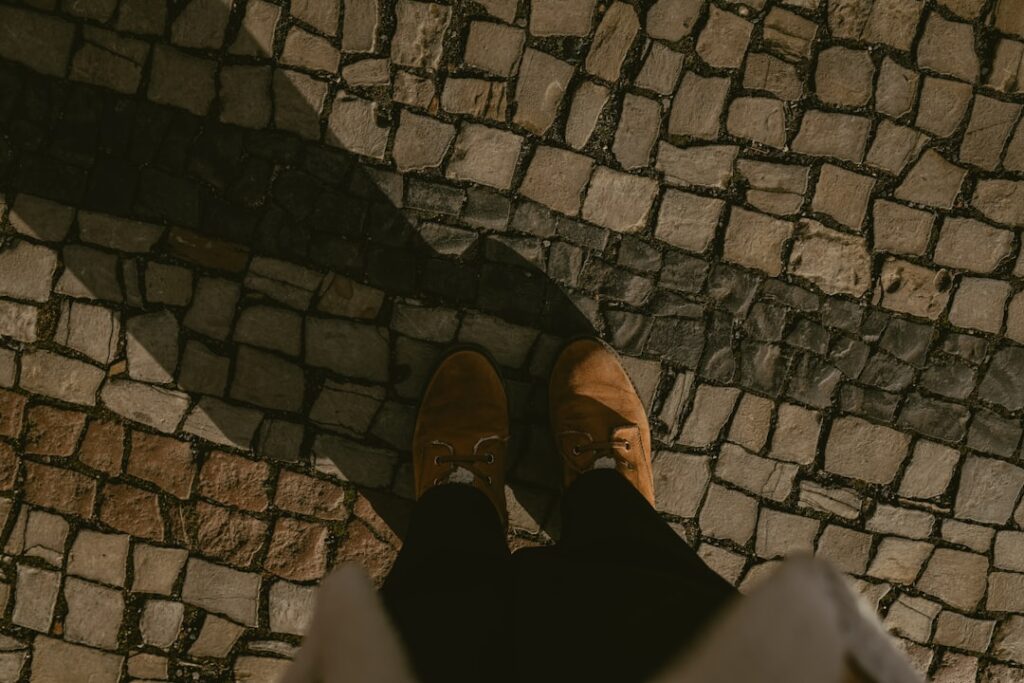
- Wear comfortable shoes: the streets around the Alcázar are cobbled and steep.
- Local vendors often sell combined tickets (Alcázar + Cathedral); compare offers and check time validity of combined tickets.
- The site is elevated and can be windy: bring a jacket in spring and autumn.
Anecdotes, Tales and Local Stories
As a central monument in Toledo, the Alcázar is full of anecdotes and stories that feed local legend. Some of these tales are well documented, others belong more to folklore, but all contribute to the site’s atmosphere.
– The 1936 Siege: as mentioned earlier, the Alcázar was the scene of a dramatic episode during the Civil War. Colonel Moscardó, commander of the besieged garrison, became a mythic figure. According to propaganda accounts, the defenders’ heroic resistance turned the Alcázar into a symbol of the Nationalist cause. eyewitness accounts and period documents, some on display in the museum’s rooms, recount the conditions of the siege, the bombardments and life inside the besieged walls.
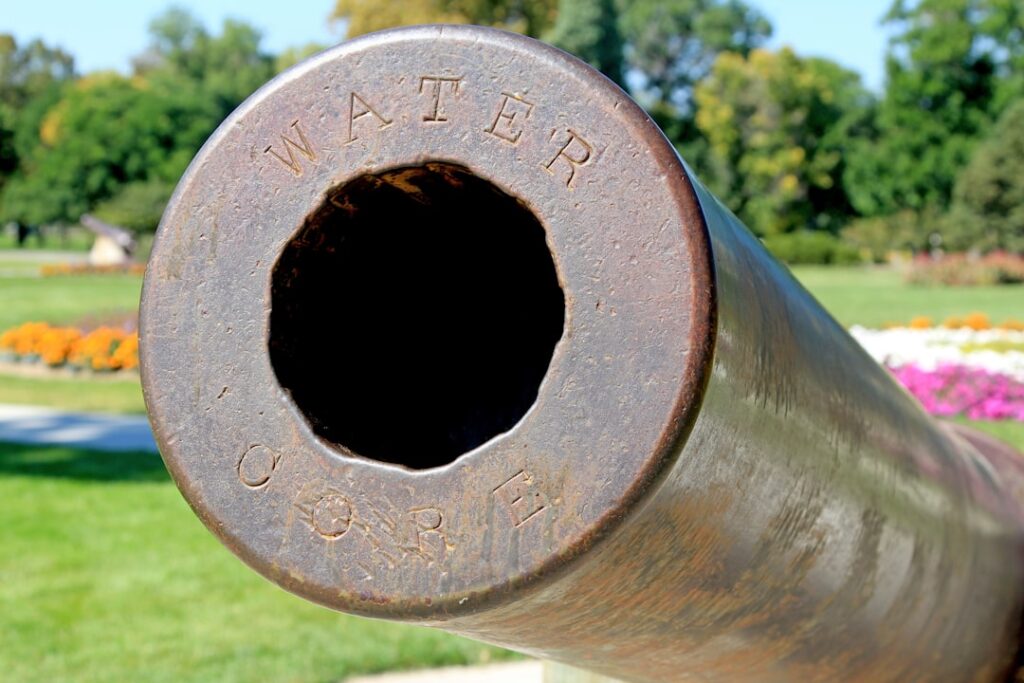
– The « talking » cannons: among the collections, certain pieces have their own stories — cannons recovered from battlefields or diplomatic gifts from other armies. Local guides enjoy telling the journey of these pieces, from their manufacture to their installation in the museum.
– The hidden treasure legend: like many old fortresses, the Alcázar is surrounded by tales of buried treasure and royal caches. Although excavations and archives haven’t confirmed these mythical hoards, local folklore sometimes mentions chests hidden during sieges and later found by workers.
– Controversial restorations: some 20th‑century restorations sparked debates among historians and authorities over faithful restitution of elements and post‑war memorial staging. These debates are part of the monument’s recent history and influence how it is interpreted today.
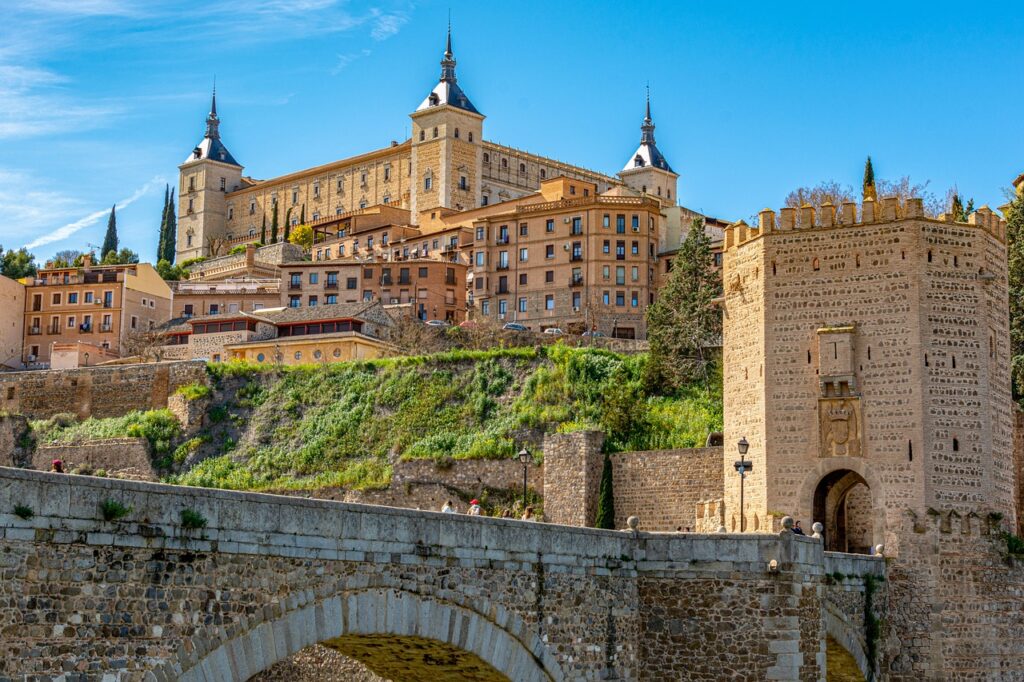
– Famous photographs: the Alcázar’s silhouette and its view of the cathedral have inspired many painters and photographers. The viewpoint from the terrace — or from the Mirador del Valle on the opposite side of the Tagus — is often cited as one of the best panoramas of Toledo.
These anecdotes bring the visit to life: when you listen to a local guide or read the labels, keep in mind that every stone has a story and that the monument has served very different functions across eras. Talking with locals (newsagents, restaurateurs or artisans) can add complementary stories, sometimes passed down orally for generations.
Local Tips and Routes to Extend Your Visit
After visiting the Alcázar, Toledo’s old town offers many options to continue your exploration. Here are practical suggestions and local routes for a half‑day or a full day.
Recommended morning route:
– Start: Plaza de Zocodover — take a moment to observe urban life and the surrounding façades.
– Alcázar of Toledo (visit 1h30–2h).
– Cathedral of Saint Mary of Toledo (Catedral Primada, Calle Cardenal Cisneros, s/n, 45002 Toledo) — note the exact address: visit the cathedral, chapels and treasure (prices vary, plan €8–10).
– Lunch break: a local restaurant recommended for Manchego cuisine (for example a traditional mesón or tapas tavern around the Plaza del Ayuntamiento).
Recommended afternoon route:
– Monastery of San Juan de los Reyes (Calle de los Reyes Católicos, s/n, 45003 Toledo) — Isabelline Gothic architecture and a remarkable cloister.
– Mirador del Valle: for a sweeping panorama of Toledo, descend toward the river and reach the viewpoint (access on foot or by taxi, perfect for sunset).
– Stroll through the Jewish Quarter (Judería): narrow streets, historic synagogues converted into museums (Santa María la Blanca Synagogue, Calle Samuel Levi), and local craft shops (Toledan steel — forges and knives).
Culinary and local tips:
– Try mazapán (Toledo’s traditional marzipan); the pastry shops on Calle Santo Tomé are renowned.
– For a typical lunch, taste carcamusa (a local stew) in a tavern near Plaza de Zocodover.
– Restaurants near the Alcázar often have terraces with views; book ahead in high season.
Photography tips:
– Best times: sunrise for soft light and fewer people; sunset from the Alcázar terrace or the Mirador del Valle for warm tones on the stone.
– Gear: wide‑angle for panoramas, a telephoto to isolate architectural details, and slip‑resistant shoes for walking on rooftops and old staircases.
[[IMAGE:Traditional Spanish tapas dish near Alcazar Toledo local restaurant]]
Conclusion: Why the Alcázar of Toledo Deserves Your Visit
The Alcázar of Toledo is far more than a single monument: it’s a stone‑bound book opening onto the history of a city and a country. Its commanding position on the hill, martial silhouette and museumized interiors offer a complete experience where you can admire architecture, understand key historical episodes and enjoy exceptional views over the old town. Whether you come for military history, photography or the pleasure of a stroll through the historic core, the Alcázar meets diverse expectations.
Visiting the Alcázar also means confronting Spain’s complex memory: the same place can evoke military pride, the tragedy of a siege, heritage and debates over conservation. This narrative richness is one of the site’s strengths, tying visual experience to deep historical layers. The Museo del Ejército’s collections provide a solid educational dimension, while the terraces and viewpoints offer truly memorable moments of contemplation.
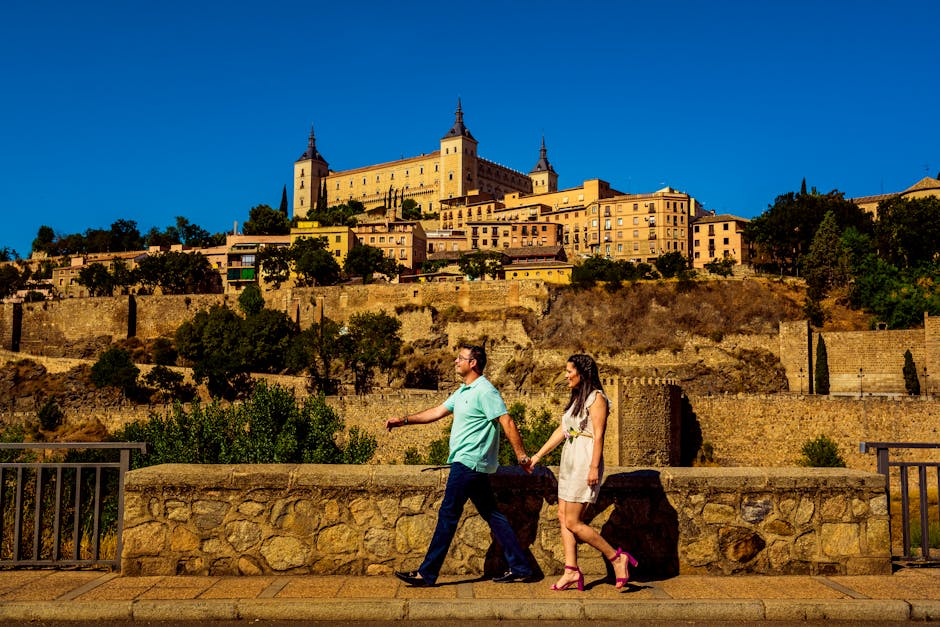
To get the most out of your visit: check updated hours and prices, arrive early or late in the afternoon to avoid crowds, complement the Alcázar visit with a walk through nearby quarters (Cathedral, Judería, Monastery of San Juan de los Reyes), and take time to speak with local guides to capture lively anecdotes and stories. The local craft shops and cafés round out the experience: a day in Toledo should be as sensory as it is cultural.
In short, the Alcázar of Toledo remains essential for understanding the city: its military past, symbolic role and museum present intertwine to offer visitors an impressive and instructive monument. Don’t forget your camera, comfortable shoes and a guide or audio guide if you want to dive deeper into the collections — and enjoy your stay in majestic Toledo.