


Introduction: The Alcázar of Toledo — history, stone and tourist strategy
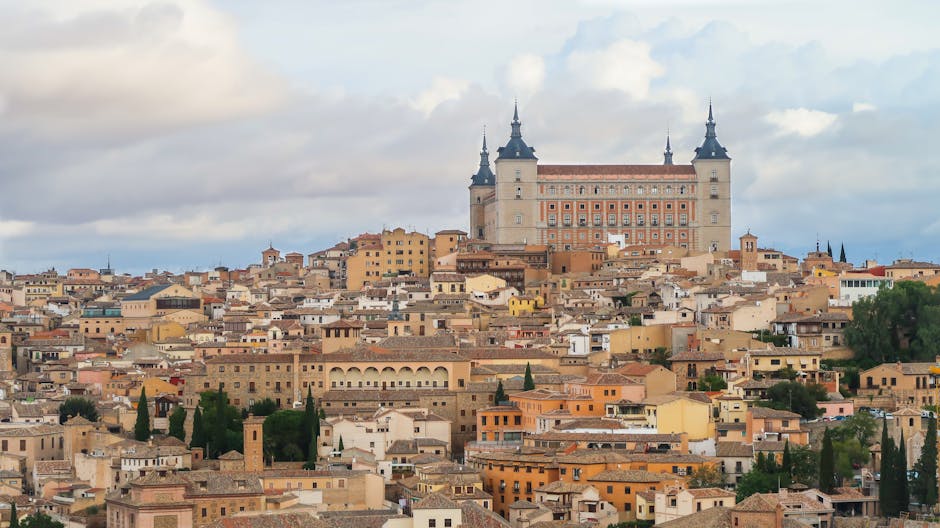
Perched on the highest hill of the fortified city, the Alcázar of Toledo (Alcázar de Toledo) dominates the skyline with a square, imposing silhouette that has shaped the region’s fate for centuries. The building — at various times a Roman stronghold, a medieval palace, a barracks, and today a museum — is a living lens on Spanish history. For the mindful traveler, visiting the Alcázar is more than ticking off a landmark: it’s an immersion into military strategy, reconstructions, arms and armour collections, and the echoes of sieges and battles that forged Toledo. But a poorly planned visit can quickly cost you time — and money. Long lines, tickets bought from resellers, overcrowded guided tours, or bad timing are common pitfalls.
This practical, comprehensive guide gives you the exact information you need to get the most out of your visit to the Alcázar of Toledo without wasting time or money. You’ll find concrete details: the full name of the site, the exact address, typical opening hours and prices in euros, advice for buying tickets online, tips to avoid crowds and informal sellers, accessibility options, and suggestions for pairing the Alcázar with nearby highlights like the Cathedral of Santa María de Toledo or the El Greco Museum. The approach blends history and pragmatism: we briefly outline the building’s architectural and military evolution, then list practical precautions to ensure an efficient and economical visit.
Toledo is compact but very busy, especially in high season (spring, Semana Santa, summer). Visitors who turn up without a plan often find themselves stuck at crowded ticket desks, offered expensive cookie-cutter tours, or missing museum rooms that close earlier than others. This guide offers strategies to avoid those traps: book ahead, choose the right time slot, take advantage of discounts and free-entry days, use the best entrances and routes, and know when to opt for a self-guided visit versus a guided one. We also share local tips — where to leave luggage, which nearby cafe gives the best value before or after your visit, and the best vantage points for memorable photos.
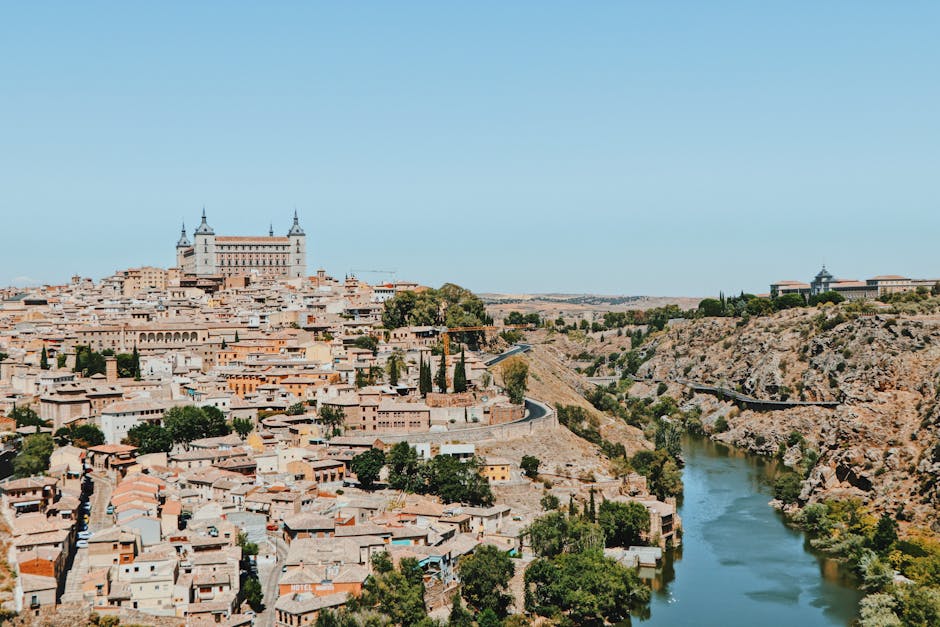
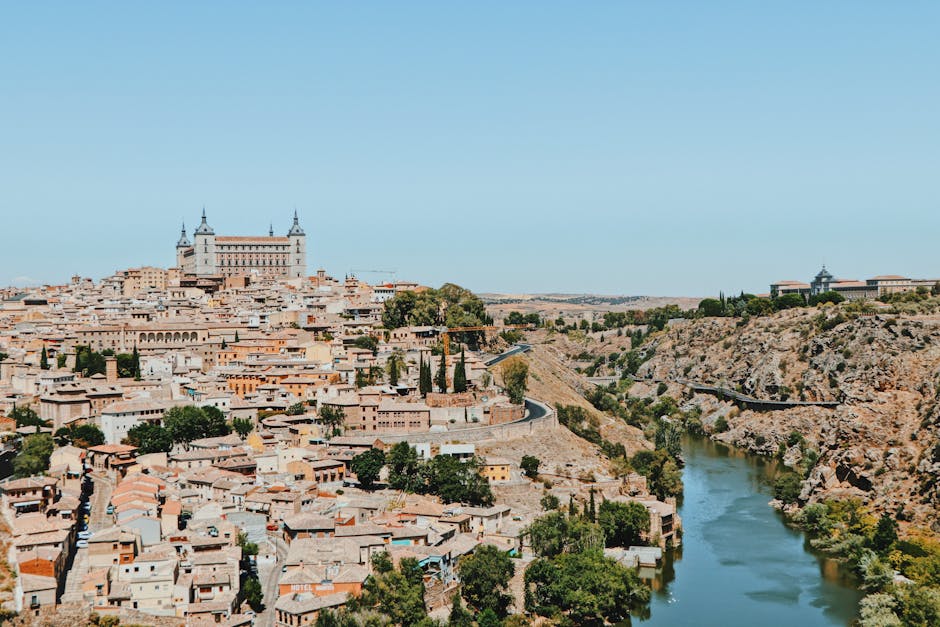
Finally, the Alcázar experience isn’t limited to the interior. The views from the Plaza del Alcázar, the fortress’s profile above the Tagus, and the restored rooms all provide chances to photograph and understand how military history is woven into the urban fabric. This guide will help you plan a rational, immersive and budget-friendly visit so you can fully appreciate this major Toledo landmark without wasting time or money.
1. Quick history and architecture: know the Alcázar before you go in
The Alcázar of Toledo, often simply called the Alcázar, is a building with a layered history. Its strategic position on the city’s highest hill made it essential for territorial control since Roman times. The structure you see today went through major reconstructions, notably after the 1936–1937 siege during the Spanish Civil War when it was heavily damaged. The reinforced and partially restored version also reflects work from the 16th century — when Charles V had parts remodeled — and 20th-century restorations to house the Museo del Ejército (Army Museum) and, more recently, other institutions.
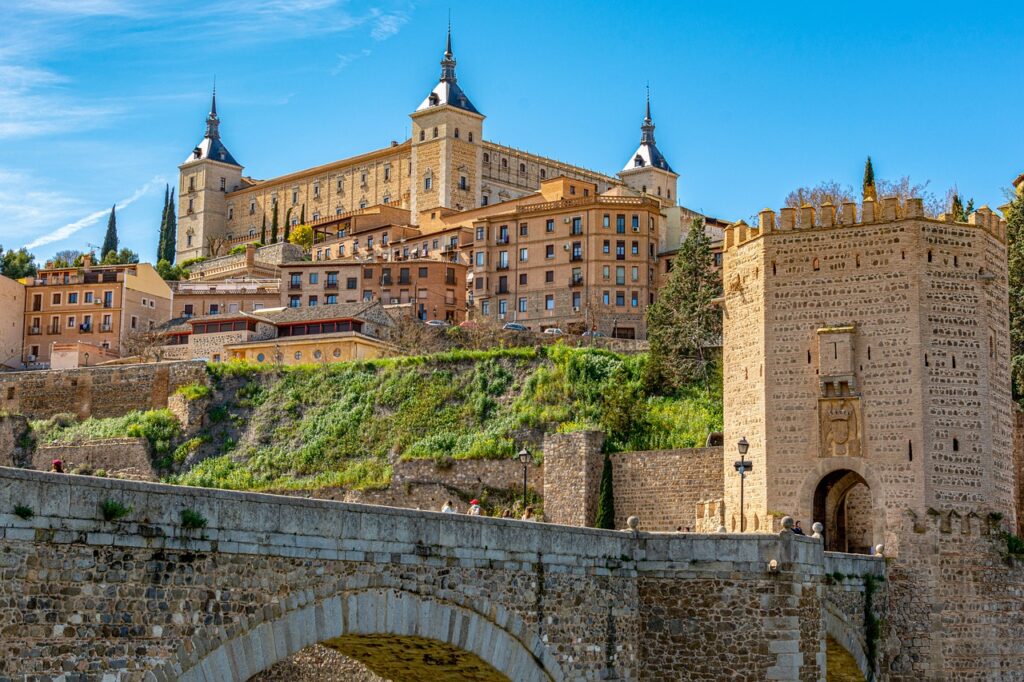
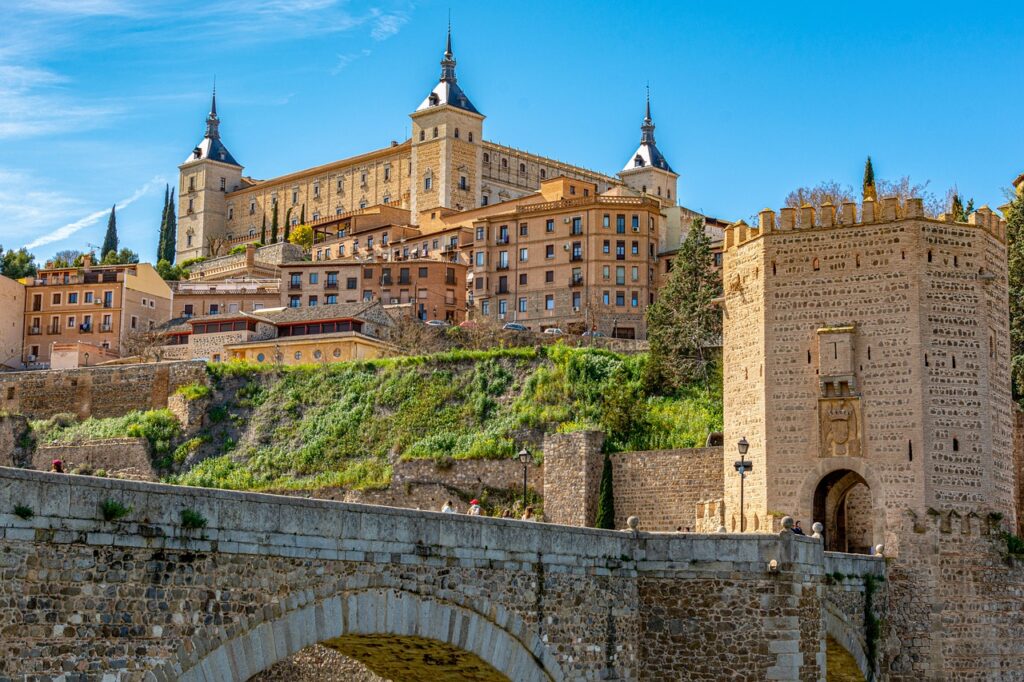
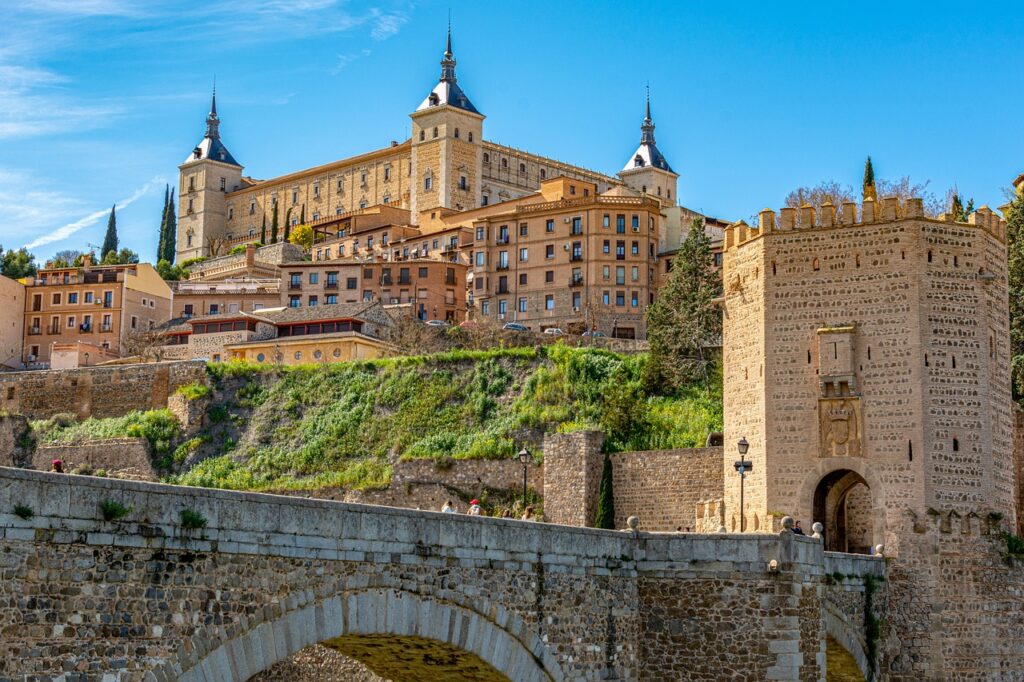
Architecturally, the Alcázar merges military features with palatial elements. Massive defensive walls, square corner towers and the solemn facade facing the Plaza del Alcázar (Plaza del Alcázar, 3, 45001 Toledo, Spain) all speak to its defensive purpose. Inside, rooms vary widely: armories, exhibition halls, inner courtyards and renovated spaces showcase different materials — stone, brick, and signs of repeated alterations. A visit lets you see the layers of time: medieval traces, modern interventions and contemporary museography.
Historically, the Alcázar has been the scene of key events: sieges during the Reconquista, the emblematic siege in the Civil War where it was defended by Francoist forces against Republican militias for months, and later acts of memory and restoration. The permanent exhibitions at the Museo del Ejército tell this military continuity through collections of weapons, uniforms, models and documents. For history lovers, every room sheds light on the evolution of weaponry, tactics and the political context that shaped the Iberian Peninsula.
Before going in, take time to read the exterior panels and admire the silhouette from the Plaza del Alcázar and the viewpoint overlooking the Tagus. Understanding the historical context will enrich your indoor visit: you’ll better recognize defensive lines, the layout logic, and the significance of the displays. Also remember the building functions both as a historic monument and an institutional museum: some wings may be reserved for temporary exhibitions or closed for restoration, so check practical info (hours and prices) before you set off.
2. Practical info: address, opening hours, prices and how to avoid common traps
Exact address: Alcázar of Toledo (Museo del Ejército) — Plaza del Alcázar, 3, 45001 Toledo, Spain. This is the official reference for GPS devices and the meeting point for guided tours. The building sits a few steps from the Plaza de Zocodover and about 500–800 metres from the Cathedral of Santa María de Toledo, making it an ideal starting point for a day of sightseeing.
Typical opening hours (subject to seasonal changes or special events — always check the official site right before your visit):
- Tuesday to Saturday: 10:00 – 18:00
- Sunday: 10:00 – 15:00
- Monday: closed (a common closing day for the institution)
These hours match the usual schedules for national and military museums in Spain. Note that entry usually shuts 30 to 45 minutes before closing, and some rooms may close earlier for security or conservation reasons.
Indicative prices in euros (observed typical rates):
- General admission: €5.00
- Reduced admission (students, seniors): €2.50
- Children (age rules vary): often free for under-16s — check conditions
- Official guided tour: €10.00 to €15.00 per person (depending on language and group)
- Audio guide: €3.00 to €5.00
These amounts are indicative; some national days or certain Sundays may offer free entry for all. School groups and educational visits may have special rates.
Tips to avoid wasting time and money:
- Book online: buy your tickets directly on the Museo del Ejército’s official website or through the official ticketing of the Junta de Castilla-La Mancha when available. Avoid unofficial resellers who inflate prices. Booking secures a time slot and reduces queuing at the ticket desk.
- Avoid peak times: arrive right at opening (10:00) or after 16:00 to enjoy fewer visitors. Midday and the period right after tourist coaches arrive (roughly 11:00–13:30) are the busiest.
- Check the closing day: many institutions close on Monday. If your Toledo itinerary includes a Monday, reschedule your visit.
- Look for combined tickets: when available, Alcázar + Cathedral or other museum combos can save you money. Compare the combined price with separate tickets to be sure.
- Choose self-guided if you’re short on time: guided tours are enriching but often last 90 minutes or more. A well-prepared self-tour can cover highlights in 45–60 minutes.
3. Recommended route inside the Alcázar: see the essentials without wasting a minute
If your goal is to see the Alcázar’s highlights without spending hours, follow this timed, logical route. It’s designed for visitors on a tight schedule who still want a solid understanding of how the spaces connect historically.
Suggested route (total recommended duration: 45–75 minutes):
- 0–10 minutes: facade and exterior perspective — If possible, arrive 10 minutes before opening. Use the morning light to photograph the facade on the Plaza del Alcázar. Locate the information panels, the main entrance and the ticket desk. If you already have printed or electronic tickets, head straight to security checks.
- 10–25 minutes: entrance hall and introductory rooms — Start with the ground-floor rooms. These typically offer a chronological overview: models, maps and explanatory panels. This will give you the context needed to appreciate the upper rooms.
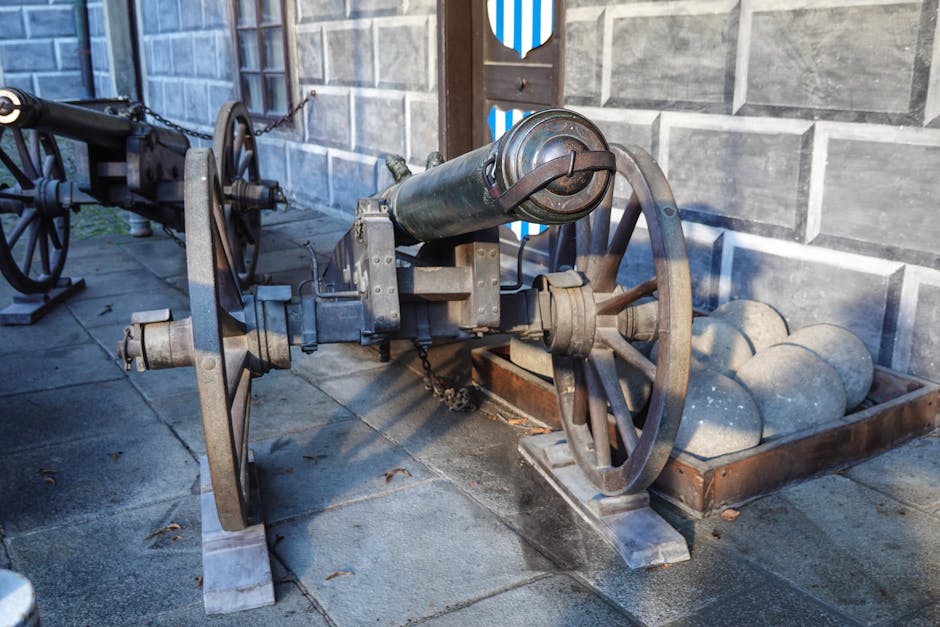
- 25–45 minutes: armoury and main exhibition — Spend a solid 15 minutes on the main collection: armours, uniforms, cannons and banners. These are the displays that draw the most attention and photos (where permitted).
- 45–60 minutes: towers and viewpoints — Head up to accessible high points. Views over the Tagus valley and the city are often a highlight. Take panoramic shots but respect conservation zones and closed areas.
- 60–75 minutes: gift shop and exit — Stop by the shop for a printed guide, postcards or replicas if you want souvenirs. The shop often has items cheaper than outside vendors.
Timing tips:
- Move methodically: if a room is crowded, move to the next and come back later. Crowds tend to shift quickly.
- Prioritize your interests: if you love artillery, spend more time in the weapons gallery; if architecture is your thing, focus on towers and restored walls.
- Use the audio guide: to stay efficient, an audio guide gives structure and saves time reading every panel. At €3–5 it’s often worth it when you’re short on time.
- Photography: keep it quick: don’t spend 10 minutes shooting every object. Capture the essentials and return only if you have extra time.
4. Precautions, safety, accessibility and local tips to optimize your visit
Security and checks: The Alcázar is both a historic building and an official museum; expect security checks at the entrance (light bag inspections). Avoid bringing large suitcases: most museums do not accept bulky luggage and there isn’t always a left-luggage facility on site. If you come with a backpack, wear it on your front during the visit to avoid damaging narrow display cases.
Accessibility: The Alcázar has been partially adapted for visitors with reduced mobility, but because of its historic nature some floors or towers can remain hard to access. Practical info:
- Accessible access: the main entrance and ground-floor exhibition rooms are generally accessible, but some towers or balconies are not.
- Elevators: there may be lifts to reach certain areas. Ask staff for an accessible route if you need one.
- Restrooms: located on the ground floor; check accessibility on arrival.
Local tips and small savings:
- Transport and parking: Toledo is very walkable. If you arrive by car, park in an outside public car park like Parking Safont (Paseo de la Rosa, s/n, 45002 Toledo) or Parque de la Vega; expect roughly €1.50–€2.50 per hour depending on the zone. Streets around the Alcázar are often pedestrian and steep, so walk from a structured car park or park near Plaza de Zocodover (Plaza del Zocodover, 45001 Toledo) for easier on-foot access.
- Where to eat: the area around Plaza del Alcázar and Calle Comercio has small cafés. For better value, look for local taverns on Calle de la Trinidad or Calle Hombre de Palo rather than the tourist restaurants near the Cathedral.
- Avoid informal sellers: outside the museum, some people offer “quick tours” or overpriced tickets. Always buy at the official ticket desk or the official website.
- Free days: check for free-entry days (sometimes Sundays for national museums). Visiting on a free day can save money but increases crowds — weigh the pros and cons.
- Photography: most areas allow non-flash photography. Respect no-photo zones (fragile items, conservation rooms). If you’re a pro or need a tripod, request special permission at the ticket desk.
5. Around the Alcázar: combine visits and make the most of your day in Toledo
The Alcázar sits at the heart of a dense cluster of monuments. To make the most of your day in Toledo, here are some suggested pairings and approximate walking times from the Alcázar entrance (Plaza del Alcázar, 3).
Sites to combine:
- Cathedral of Santa María de Toledo — Calle Cardenal Cisneros, 1, 45002 Toledo. About 8–12 minutes on foot. Hours: usually 10:00–18:30 (variable), admission around €10.00, reduced rates available. Inside you’ll find altarpieces, tapestries and masterworks including pieces by El Greco.
- Monasterio de San Juan de los Reyes — Calle de los Reyes Nuevos, 2, 45003 Toledo. About 10–15 minutes on foot. Admission €3–5; hours vary. A highlight is the Gothic cloister and its intricate decorative details.
- Mirador del Valle — Paseo del Mirador, a panoramic viewpoint of the city and the Alcázar from the opposite bank of the Tagus. Reachable by car or bus (10–15 minutes from the center). Perfect at sunset for photos.
- El Greco Museum — Plaza del Conde, 2, 45002 Toledo. 7–10 minutes on foot. Admission around €3–5, typically open 10:00–18:00. Recommended if you appreciate religious art and late Renaissance painting.
Sample day plan:
- Early morning: arrive in Toledo, park, walk to the Alcázar. Enter at 10:00.
- Morning: visit the Alcázar (45–75 minutes).
- Lunch: quick meal in a local taberna (menu del día often €10–15).
- Afternoon: visit the Cathedral of Santa María de Toledo and the El Greco Museum, then stroll through the Judería (old Jewish quarter).
- End of day: head to Mirador del Valle for the sunset (if you have a car or take a tourist bus).
Final planning tip: if you only have a few hours in Toledo, prioritize the Alcázar and the Cathedral. With a full day, add San Juan de los Reyes and the Mirador for a well-rounded sense of the historic landscape and unbeatable panoramas.
Conclusion: prepare well for a rewarding and economical visit
Visiting the Alcázar of Toledo is an experience at the crossroads of history and smart travel planning. By first understanding the building’s historical role and checking opening hours, prices and entry conditions, you’ll avoid the most common costly mistakes: buying tickets from resellers, wasting time in long lines, or showing up on a closed day. This guide has given you exact addresses (Plaza del Alcázar, 3, 45001 Toledo), indicative opening times (generally Tuesday–Saturday 10:00–18:00, Sunday 10:00–15:00), and price ranges (general admission ≈ €5.00, reduced ≈ €2.50, guided tours €10–15) so you can plan with confidence.
Key takeaways: book tickets online or buy at the official desk, arrive early to dodge the crowds, opt for an audio guide if you’re pressed for time, and pair the Alcázar with nearby monuments to make travel efficient. Also take care of logistics: use recommended parking, avoid large suitcases, check accessibility if needed, and set aside time to enjoy the Tagus valley views. Finally, respect conservation rules and no-photo zones to help preserve this heritage for future generations.
With a bit of preparation, a visit to the Alcázar of Toledo becomes far more than a series of rooms to walk through: it turns into a narrative where every hall, every weapon and every stone tells part of Spain’s story. Follow this practical guide and you’ll explore this iconic monument without wasting time or money — and take away a deeper understanding and memorable images of Toledo.